
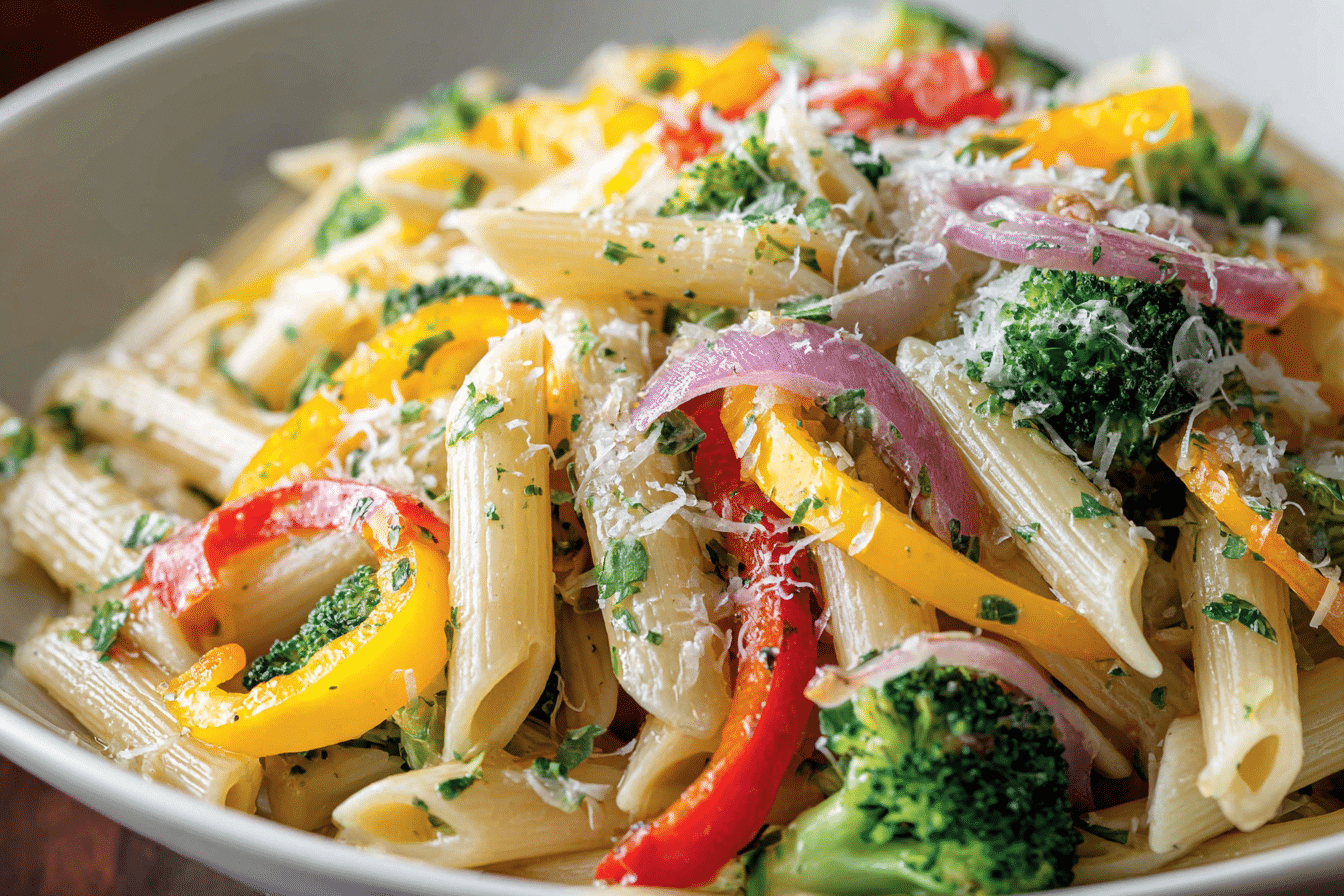
Vegetarian Pasta Primavera is a celebration of seasonal vegetables wrapped in tender pasta and a light, silky sauce. The name “primavera” means spring, and this dish captures that feeling through colorful produce, delicate herbs, and bright flavor.
Instead of relying on heavy cream or rich sauces, Vegetarian Pasta Primavera focuses on freshness. Crisp-tender vegetables, lightly sautéed in olive oil and garlic, mingle with perfectly cooked pasta. A splash of lemon and a sprinkle of Parmesan tie everything together without overpowering the natural sweetness of the vegetables.
This recipe is adaptable, satisfying, and full of texture. Each forkful brings a balance of soft pasta, slightly crisp vegetables, and a smooth, glossy coating of sauce. Whether served as a weeknight dinner or a centerpiece for a casual gathering, Vegetarian Pasta Primavera offers comfort and brightness in every bite.
Ingredients Overview
The beauty of Vegetarian Pasta Primavera lies in its flexibility, but thoughtful ingredient choices make a noticeable difference.
Pasta forms the base. Short shapes such as penne, farfalle, or rotini work particularly well because they catch bits of vegetables and sauce in their ridges and folds. Spaghetti or linguine can also be used for a more classic presentation.
Olive oil provides richness and carries the flavor of garlic and herbs. Choose a good-quality extra virgin olive oil for a smooth, fruity base.
Garlic adds depth. Freshly minced cloves gently sautéed in oil create an aromatic foundation without overwhelming the vegetables.
Seasonal vegetables are the heart of the dish. Common choices include zucchini, yellow squash, bell peppers, cherry tomatoes, broccoli florets, asparagus, carrots, and snap peas. The goal is a mix of textures and colors. Firmer vegetables like carrots and broccoli require slightly longer cooking, while tender ones like zucchini cook quickly.
Red onion or shallots contribute mild sweetness and subtle sharpness.
Vegetable broth or a splash of reserved pasta water helps create a light sauce that coats the pasta without heaviness.
Fresh lemon juice brightens the entire dish and balances the richness of the olive oil.
Grated Parmesan cheese adds a savory finish. For a fully vegetarian version, use Parmesan labeled vegetarian-friendly, as traditional versions may contain animal rennet.
Fresh basil and parsley add fragrance and a fresh herbal note at the end.
Salt and freshly ground black pepper bring all the flavors into balance.
Step-by-Step Instructions
Begin by bringing a large pot of salted water to a rolling boil. Add the pasta and cook according to package instructions until al dente. The pasta should be tender but still slightly firm in the center.
Before draining, reserve about one cup of the pasta cooking water. This starchy liquid will help create a cohesive sauce later. Drain the pasta and set aside.
While the pasta cooks, prepare the vegetables. Slice zucchini and squash into half-moons, cut bell peppers into thin strips, halve cherry tomatoes, trim asparagus into bite-sized pieces, and cut broccoli into small florets. Keep sizes uniform for even cooking.
Heat olive oil in a large skillet over medium heat. Add minced garlic and sauté gently for about 30 seconds until fragrant but not browned. Browning garlic can create bitterness, so monitor closely.
Add firmer vegetables first, such as carrots, broccoli, and asparagus. Cook for 3 to 4 minutes, stirring occasionally. Then add softer vegetables like zucchini, bell peppers, and snap peas. Continue cooking for another 3 to 5 minutes until vegetables are tender-crisp. They should retain vibrant color and slight bite.
Add cherry tomatoes during the final minute of cooking. They should soften slightly but still hold shape.
Season the vegetables with salt and black pepper. Pour in a small splash of vegetable broth or about 1/4 cup of reserved pasta water. Allow it to simmer briefly, loosening any flavorful bits from the bottom of the pan.
Add the drained pasta directly into the skillet. Toss gently to combine. If the mixture appears dry, add more reserved pasta water a few tablespoons at a time. The starch in the water helps emulsify the oil into a light, glossy coating.
Remove the skillet from heat. Stir in fresh lemon juice and a generous handful of grated Parmesan. Toss until evenly coated.
Finish with chopped basil and parsley. Taste and adjust seasoning if needed before serving.
Tips, Variations & Substitutions
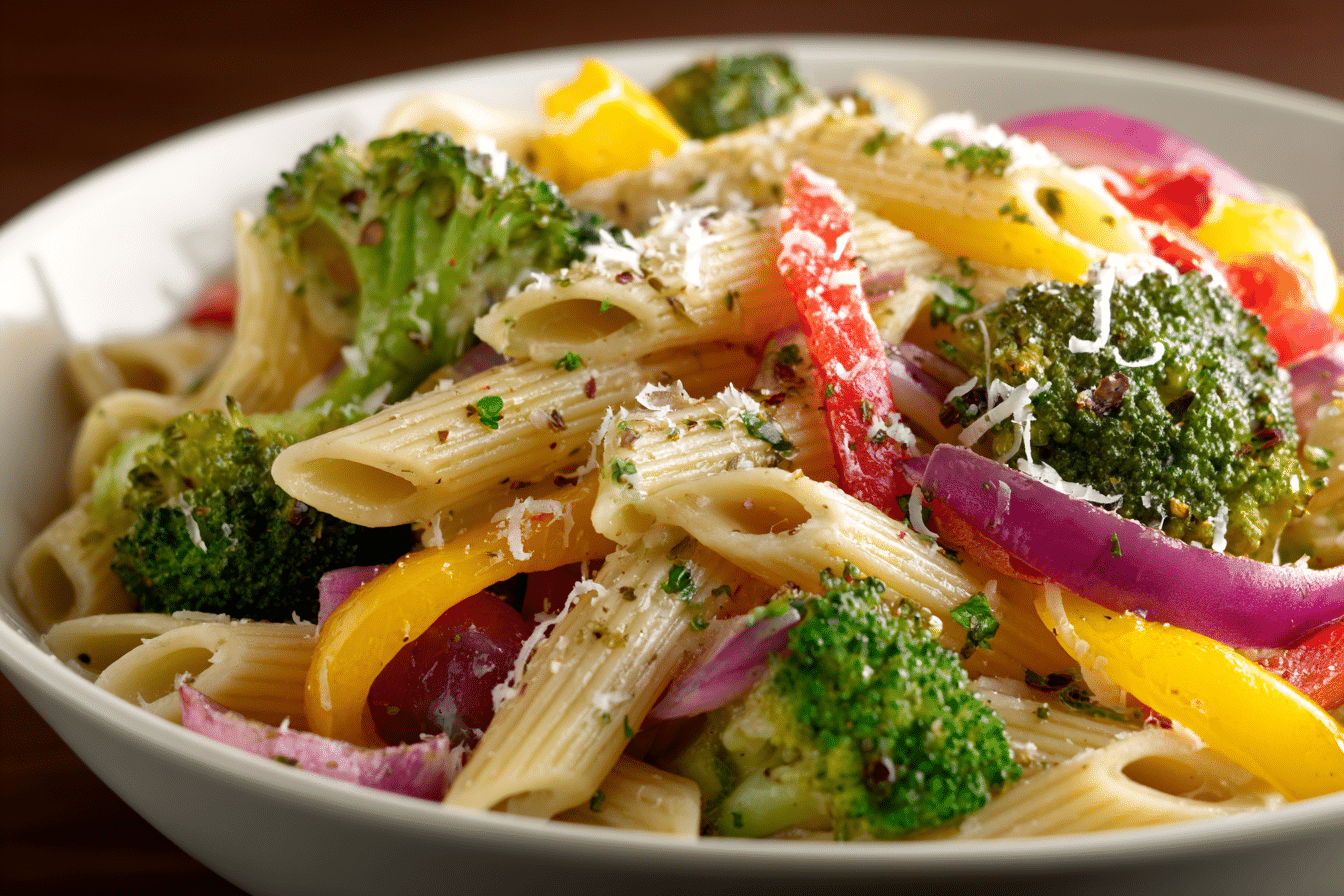
Use vegetables that are in season for the best flavor. Spring versions often feature asparagus and peas, while summer versions may highlight zucchini and tomatoes.
For added protein, stir in white beans or chickpeas during the final toss. They blend well with the light sauce and increase satiety.
If you prefer a creamier texture, add a few tablespoons of ricotta or a splash of light cream at the end. Keep the amount modest so the vegetables remain the focus.
Whole wheat or gluten-free pasta can replace traditional pasta without changing the overall technique. Adjust cooking time accordingly.
For a dairy-free version, omit the Parmesan and add nutritional yeast for a savory note.
Avoid overcooking vegetables. They should remain slightly firm and colorful rather than soft and muted.
Serving Ideas & Occasions
Vegetarian Pasta Primavera works beautifully as a main course served with crusty bread and a simple green salad. It also pairs well with grilled eggplant or roasted mushrooms.
For gatherings, serve it family-style in a large bowl garnished with extra herbs and Parmesan. The vibrant colors make it visually appealing on a buffet table.
Leftovers can be enjoyed cold as a pasta salad the next day, lightly refreshed with olive oil and lemon juice.
A glass of chilled white wine or sparkling water with citrus complements the bright flavors of the dish.
Nutritional & Health Notes
Vegetarian Pasta Primavera is rich in fiber, vitamins, and minerals thanks to its generous portion of vegetables. Broccoli and bell peppers provide vitamin C, while carrots offer beta-carotene.
Olive oil contributes heart-friendly monounsaturated fats. Using moderate amounts of cheese keeps the dish flavorful without excessive saturated fat.
Choosing whole grain pasta increases fiber content and supports steady energy levels.
Because this recipe emphasizes vegetables and balanced portions of pasta, it fits comfortably into many well-rounded eating patterns.
FAQs
Can I prepare Vegetarian Pasta Primavera ahead of time?
Yes, you can cook the vegetables and pasta separately a few hours in advance. Store them separately and combine just before serving. Reheat gently in a skillet with a splash of pasta water or broth to restore moisture.
What vegetables work best?
Almost any seasonal vegetable can be used. Zucchini, bell peppers, broccoli, asparagus, carrots, peas, and cherry tomatoes are traditional choices. Aim for a mix of textures and colors for visual appeal and balanced flavor.
How do I prevent soggy vegetables?
Cook vegetables over medium heat and avoid overcrowding the pan. Stir occasionally but allow them space to sauté rather than steam. Add softer vegetables later in the cooking process.
Can I freeze Vegetarian Pasta Primavera?
Freezing is not recommended, as cooked vegetables can become watery and lose texture when thawed. It is best enjoyed fresh or refrigerated for up to three days.
How do I make the sauce more flavorful?
Use enough salt in the pasta water and finish with fresh lemon juice and herbs. Reserved pasta water helps bind the sauce. Taste and adjust seasoning before serving.
Is this recipe suitable for vegans?
To make it vegan, omit Parmesan or replace it with a plant-based alternative. Nutritional yeast can provide a savory, cheese-like flavor.
Can I use jarred sauce instead?
This dish is designed to highlight fresh vegetables with a light coating rather than a heavy tomato or cream sauce. Adding jarred sauce would shift the flavor profile significantly, though a small spoonful of pesto can complement the vegetables nicely.
PrintVegetarian Pasta Primavera 15 Vibrant Fresh Flavors
Vegetarian Pasta Primavera features tender pasta tossed with colorful seasonal vegetables, olive oil, garlic, lemon, and Parmesan for a light yet satisfying meal.
Ingredients
12 ounces penne or pasta of choice
3 tablespoons extra virgin olive oil
3 cloves garlic, minced
1 zucchini, sliced
1 yellow squash, sliced
1 red bell pepper, sliced
1 cup broccoli florets
1 cup asparagus pieces
1 cup cherry tomatoes, halved
1/2 small red onion, thinly sliced
1/4 cup vegetable broth or reserved pasta water
1/2 cup grated vegetarian Parmesan cheese
2 tablespoons fresh lemon juice
1/4 cup chopped fresh basil
2 tablespoons chopped fresh parsley
Salt and freshly ground black pepper to taste
Instructions
-
Bring salted water to a boil and cook pasta until al dente. Reserve 1 cup pasta water and drain.
-
Heat olive oil in a large skillet over medium heat. Add garlic and sauté briefly.
-
Add broccoli and asparagus and cook 3 to 4 minutes.
-
Add zucchini, squash, bell pepper, and onion and cook until tender-crisp.
-
Stir in cherry tomatoes and cook 1 minute.
-
Season with salt and pepper. Add broth or 1/4 cup pasta water.
-
Toss in cooked pasta and mix gently.
-
Stir in lemon juice and Parmesan.
-
Finish with basil and parsley before serving.
Notes
Cook vegetables until tender but still vibrant. Adjust lemon and seasoning to taste. Add extra pasta water if needed for a silky finish.