
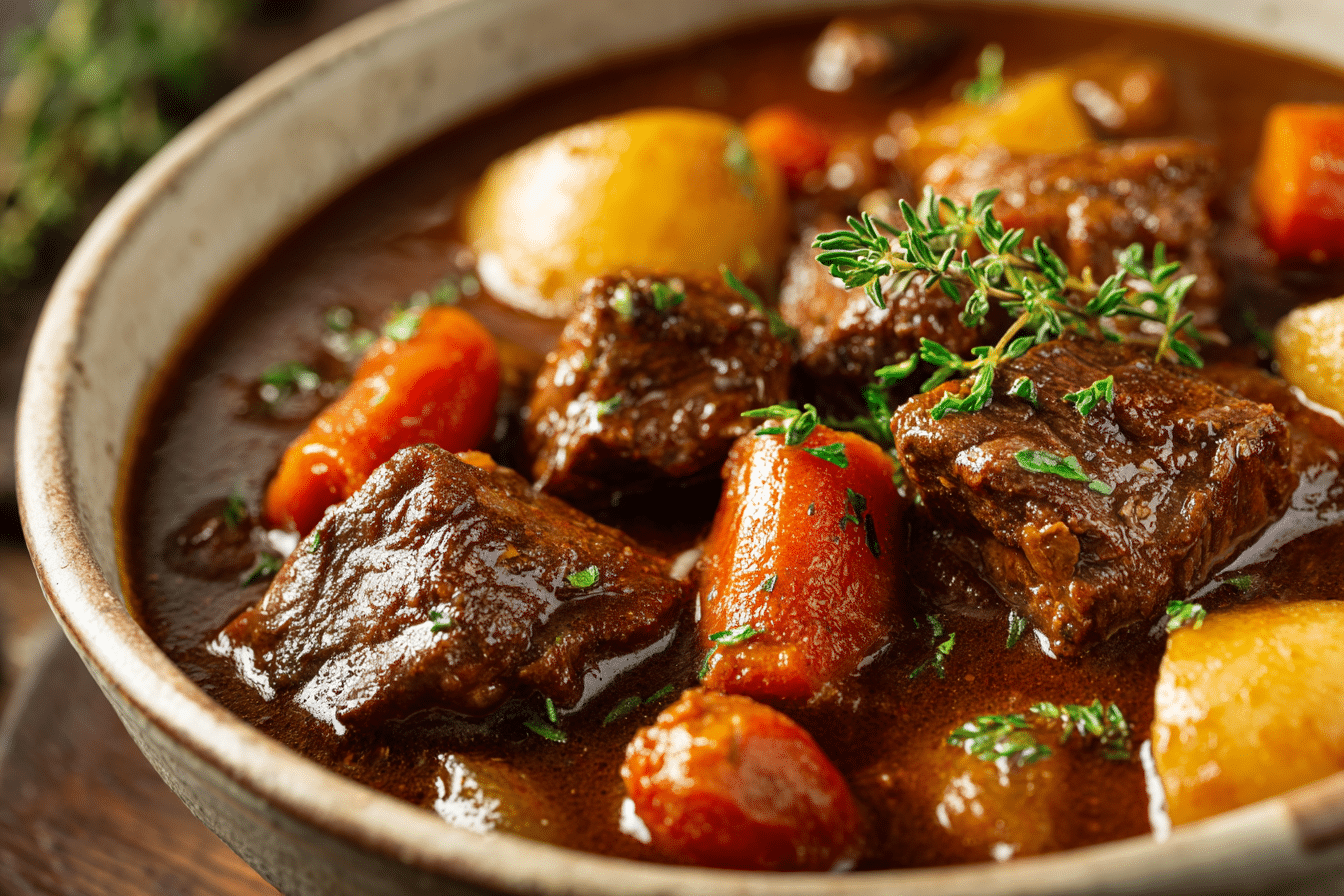
As the air grows crisp and cozy meals take center stage, few dishes deliver the same warmth and satisfaction as a homemade beef stew. This ultimate beef stew recipe offers a rich, savory blend of tender beef, hearty vegetables, and a thick, velvety broth—all cooked together in one pot for maximum ease and flavor.
From the very first spoonful, you’ll be greeted by chunks of melt-in-your-mouth beef, soft potatoes, and sweet carrots wrapped in a robust, deeply seasoned sauce. It’s the kind of dish that brings people together around the table, perfect for chilly evenings or slow Sundays.
This is not a stew that requires fancy skills or specialty ingredients. Instead, it’s built on familiar staples, a few time-tested techniques, and a slow simmer that unlocks bold flavor in every bite. Whether you’re cooking for family, stocking up your fridge, or simply craving comfort, this beef stew will quickly become your go-to recipe.
Ingredients Overview
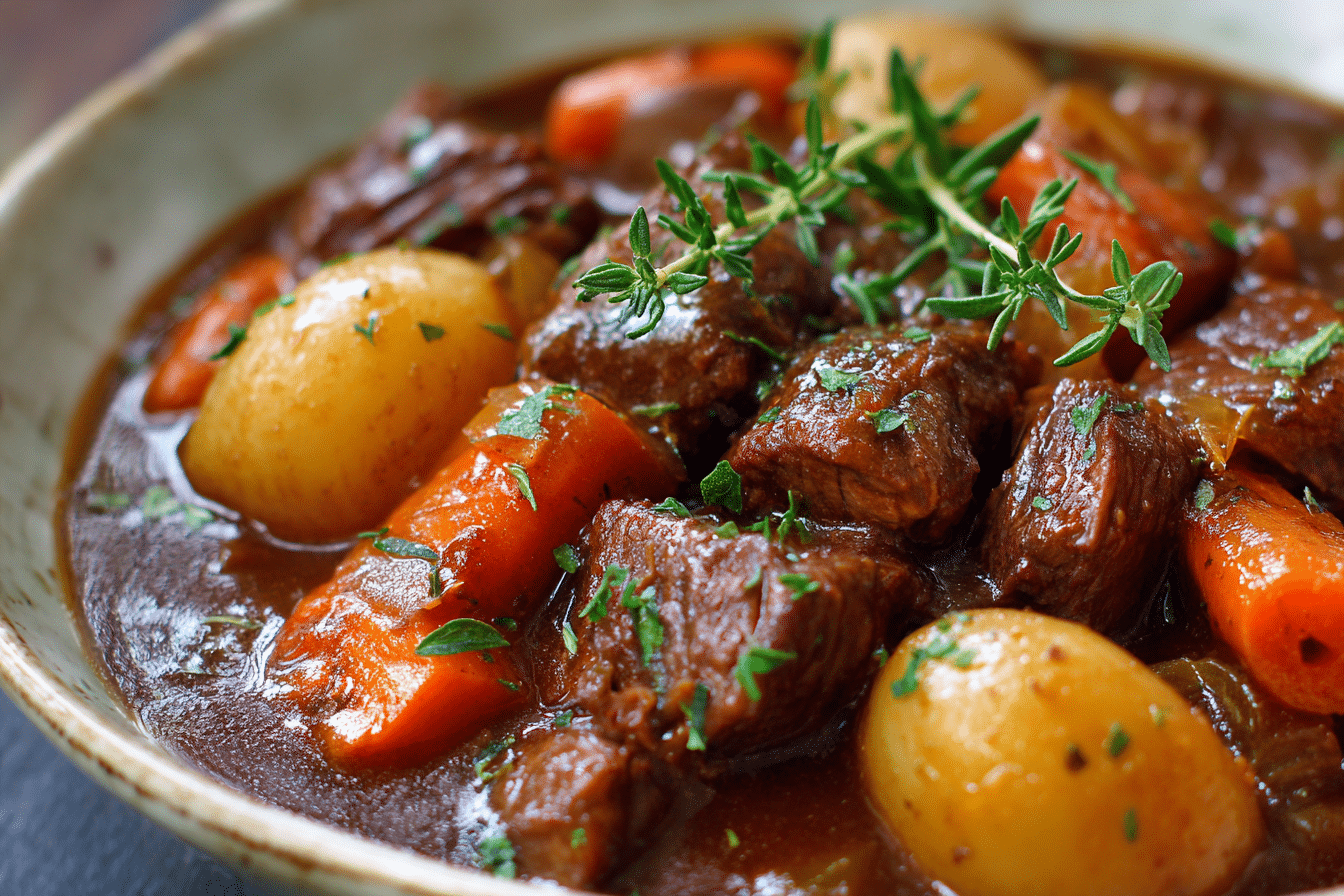
Each element of this stew plays an important role, from building the base flavor to adding texture and richness. Here’s what you’ll need and why it matters:
Beef chuck roast: A well-marbled, budget-friendly cut that becomes incredibly tender with time. As it cooks, the fat and connective tissue break down, enriching the stew’s flavor and texture. If needed, substitute with bottom round or brisket.
Carrots: Naturally sweet and earthy, carrots hold their shape well during long cooking. Thick slices prevent them from getting mushy, and they add a colorful, nutritious touch.
Potatoes: Yukon Gold or red potatoes are ideal for stews because they stay firm. Russets, while softer, will break down more and give the stew a creamier texture—great if you want extra thickness.
Celery: A foundational flavor in many soups and stews, celery adds freshness and a slight crunch. You can leave it out, but it contributes subtle depth.
Onions: Slowly sautéed onions form a savory base that builds flavor from the beginning. Yellow onions are most common, but white or even shallots will work well too.
Garlic: Just a few cloves are enough to bring warm, aromatic undertones to the dish.
Tomato paste: Concentrated and rich, it boosts umami and provides a gentle acidity that balances the stew’s richness.
Beef broth: The backbone of the stew’s liquid, beef broth delivers flavor and moisture. Use low-sodium to better control seasoning, and opt for a full-bodied broth or stock.
Red wine: Dry red wine adds richness and complexity. A cabernet, merlot, or pinot noir works beautifully. If you prefer not to use alcohol, replace it with additional broth or a splash of balsamic vinegar.
Flour: Lightly coating the meat in flour before searing helps create a golden crust and thickens the stew naturally as it simmers.
Bay leaves and thyme: Classic herbs that gently infuse the stew with earthy, aromatic notes. Use fresh or dried based on availability.
Frozen peas (optional): Stirring these in near the end adds color and a pop of sweetness. While not essential, they’re a great way to brighten the finished dish.
Step-by-Step Instructions
-
Prepare the beef: Cut the chuck roast into cubes around 1½ inches each. Blot them with paper towels to remove excess moisture, then toss in a mixture of flour, salt, and pepper until evenly coated.
-
Brown the meat: Heat oil in a large pot or Dutch oven over medium-high. Sear the beef in small batches, turning to brown all sides. Remove and set aside after browning. Avoid overcrowding the pot—this ensures proper caramelization.
-
Sauté the base: Add chopped onions to the pot, cooking them for 5 minutes until softened. Stir in the garlic and tomato paste and cook for another 1–2 minutes, allowing them to deepen in flavor.
-
Deglaze the pot: Pour in the red wine and use a spoon to scrape up all the browned bits stuck to the bottom. Let it simmer for a few minutes until slightly reduced.
-
Assemble the stew: Return the beef to the pot along with the carrots, celery, and potatoes. Pour in enough beef broth to just cover the ingredients, then add the bay leaves and thyme.
-
Simmer gently: Bring everything to a boil, then immediately reduce the heat. Cover and let it simmer on low for 2 to 2½ hours. Stir occasionally to ensure even cooking. The beef should become fork-tender, and the broth will thicken naturally.
-
Add peas and adjust: If using peas, stir them in during the final 10 minutes of cooking. Taste the stew and adjust the seasoning as needed with salt and pepper.
-
Rest and serve: Discard the bay leaves and let the stew sit off the heat for 10 minutes. This resting time allows the flavors to fully develop and the texture to settle.
Mistakes to avoid:
-
Don’t skip drying the beef—it helps it brown instead of steam.
-
Crowding the pan during browning can prevent caramelization.
-
Keep the stew at a gentle simmer—not a rolling boil—for the most tender meat.
-
Don’t rush the process; time is what turns tough beef into something luxurious.
Tips, Variations & Substitutions
Helpful cooking tips:
-
Use pre-chopped stew meat for convenience, but know that cutting your own chuck roast often yields better quality.
-
Make sure to sauté the tomato paste—it adds more flavor when slightly caramelized.
-
For thicker broth, remove the lid in the last 30 minutes of simmering.
Flavor additions:
-
Stir in a spoonful of Worcestershire or soy sauce for added umami.
-
Add a bit of Dijon mustard for a subtle tang and complexity.
-
Mix in a handful of fresh herbs like parsley before serving for brightness.
Substitutions and alternatives:
-
Gluten-free: Use cornstarch or a gluten-free flour blend for coating the meat.
-
Low-carb: Omit potatoes and use turnips or cauliflower chunks.
-
Vegetarian: Swap the beef for mushrooms and root veggies, and use vegetable broth instead.
Serving Ideas & Occasions
This beef stew is incredibly versatile when it comes to serving.
Enjoy it in a deep bowl with a chunk of crusty bread or alongside fluffy mashed potatoes. It also pairs well with buttered noodles or rice. For a lighter pairing, try a simple green salad dressed with vinaigrette to cut through the richness.
It’s ideal for relaxed family dinners, weekend meal prep, or even casual entertaining. Since it tastes even better the next day, leftovers are perfect for lunch or easy weeknight dinners.
Serve with a glass of red wine, a cold beer, or even sparkling water with lemon for a satisfying and balanced meal.
Nutritional & Health Notes
While beef stew leans into indulgent, hearty flavors, it can still be a well-balanced meal when made thoughtfully. Using lean cuts and trimming visible fat helps manage calories without sacrificing flavor.
Carrots and potatoes provide essential nutrients, like fiber, potassium, and vitamin C. Including extra vegetables like peas or greens toward the end of cooking increases the nutritional value without changing the stew’s comforting nature.
Low-sodium broth helps control salt levels, and the natural thickness from flour or starch avoids the need for heavy creams or thickeners. For even more nutrition, toss in spinach or kale right before serving for added color and vitamins.
FAQs
1. Can I cook this stew in a slow cooker?
Yes. After browning the beef and sautéing the aromatics on the stovetop, transfer everything to a slow cooker. Cook on low for 7–8 hours or high for 4–5 hours. It’s a convenient option that yields equally tender results.
2. What’s the best beef for stew?
Chuck roast is ideal due to its marbling and connective tissue, which break down over long cooking times to create juicy, flavorful beef. Brisket and bottom round are also good alternatives.
3. Can I freeze leftovers?
Absolutely. Let the stew cool completely, then portion into freezer-safe containers. Freeze for up to 3 months. Reheat gently on the stovetop or in the microwave after thawing in the fridge.
4. How can I thicken my stew more?
Simmer the stew uncovered for the last 30 minutes to allow the liquid to reduce. For a quicker fix, mix 1 tablespoon of cornstarch with 1 tablespoon of cold water and stir it in during the last 10 minutes of cooking.
5. What can I use instead of red wine?
You can replace the wine with more beef broth. To mimic the wine’s acidity and depth, consider adding a splash of balsamic vinegar or a dash of Worcestershire sauce.
6. Why is my meat still tough?
If the beef is still chewy, it probably hasn’t cooked long enough. Tough cuts need time at a low simmer to break down. Be patient and give it more time—the results are worth the wait.
7. Can I add other vegetables?
Certainly. Parsnips, mushrooms, sweet potatoes, or butternut squash all work well. Just be sure to adjust cooking time based on the vegetable—softer ones should be added later in the process.

A hearty beef stew simmered to perfection with tender meat, root vegetables, and a rich, flavorful broth. Ideal for cozy dinners and meal prep.
- Prep Time: 15 minutes
- Cook Time: 15 minutes
- Total Time: 30 minutes
- Yield: 6 servings 1x
Ingredients
2½ lbs beef chuck, cubed
2 tbsp all-purpose flour
Salt and black pepper, to taste
2 tbsp olive oil
1 large yellow onion, diced
3 garlic cloves, minced
2 tbsp tomato paste
1 cup dry red wine
4 cups beef broth (low sodium)
3 carrots, thickly sliced
3 celery stalks, chopped
3 medium Yukon Gold potatoes, diced
2 bay leaves
1 tsp dried thyme or 1 tbsp fresh
1 cup frozen peas (optional)
Instructions
-
Coat beef with flour, salt, and pepper.
-
In a large pot, heat oil and sear beef in batches until browned. Set aside.
-
Sauté onion until soft. Add garlic and tomato paste; cook 2 minutes.
-
Deglaze with wine, scraping up bits. Simmer briefly.
-
Return beef to pot. Add carrots, celery, potatoes, broth, bay leaves, and thyme.
-
Bring to a boil, reduce heat, cover, and simmer for 2 to 2½ hours.
-
Stir in peas in final 10 minutes. Season to taste.
-
Discard bay leaves. Let stew rest before serving.