
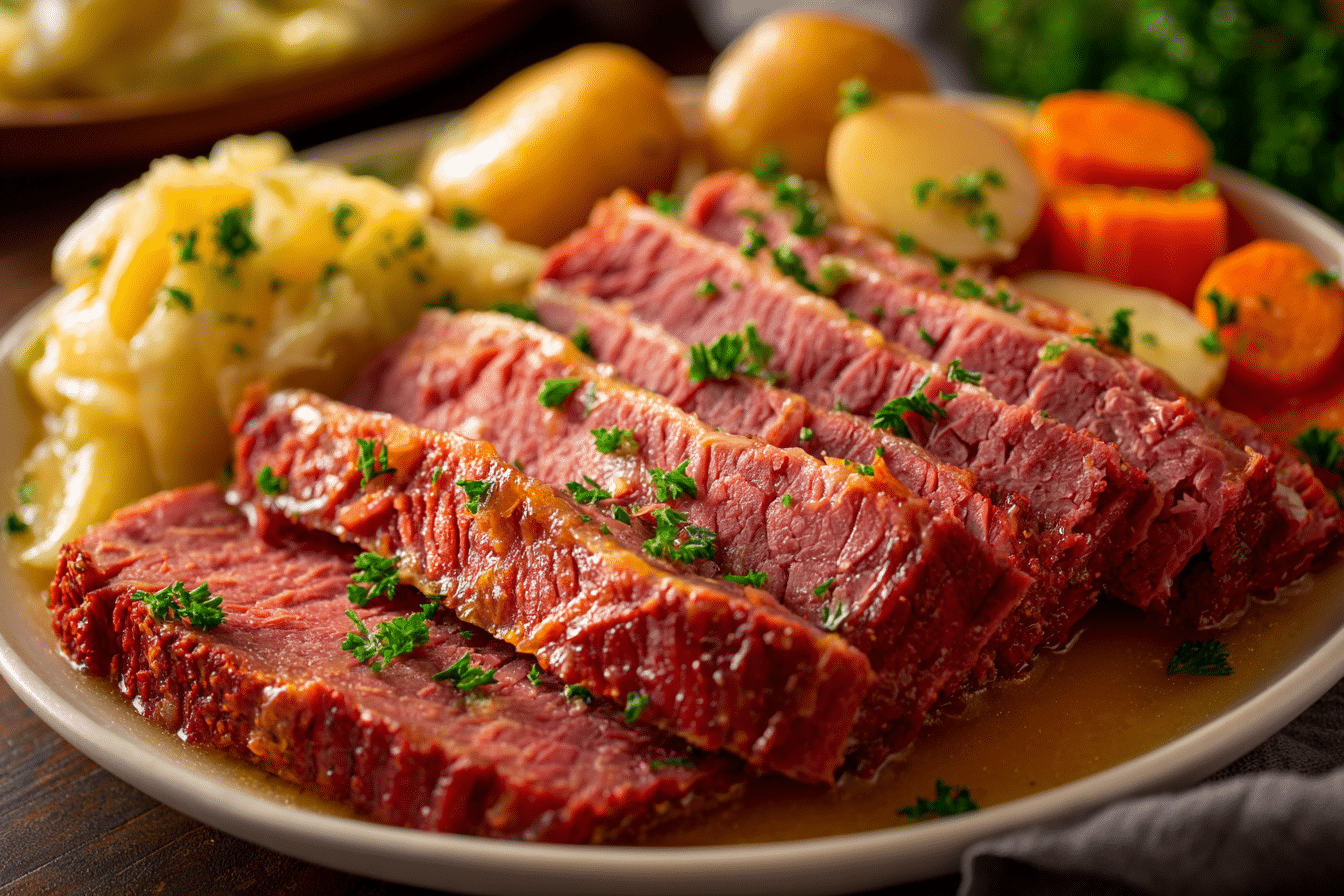
Traditional Irish corned beef is a beloved comfort food steeped in cultural history and culinary warmth. While many associate it with St. Patrick’s Day, especially in the U.S., the dish actually has more of an Irish-American origin than a purely Irish one. In Ireland, pork was historically the meat of choice, but when Irish immigrants arrived in America, they found beef more accessible and began curing brisket using familiar salt-based preservation methods.
What makes traditional Irish corned beef so special is its rich, salty-sweet flavor profile, incredibly tender texture, and its role as a centerpiece in festive family meals. It’s often served with cabbage, potatoes, and carrots — a humble, rustic feast that fills the kitchen with cozy, savory aromas. Whether you’re celebrating Irish heritage or simply craving a soulful slow-cooked dinner, this dish delivers every time.
Ingredients Overview
Corned beef may seem simple, but each ingredient plays a key role in flavor and texture. Here’s a closer look at what goes into this classic:
-
Corned Beef Brisket (4–5 lbs)
This cut is typically cured with a mixture of salt, sodium nitrite, and pickling spices. The brisket’s fat content and connective tissue break down during long cooking, producing juicy, fork-tender slices. Look for a flat cut for leaner slices, or a point cut for more marbling. -
Pickling Spices
Essential for that signature corned beef flavor. A standard blend includes:-
Mustard seeds
-
Coriander
-
Black peppercorns
-
Cloves
-
Allspice
-
Bay leaves
-
Crushed red pepper
You can use the packet included with store-bought corned beef or make your own.
-
-
Water or Beef Broth
Used for simmering. Water keeps it simple, while broth adds depth. Make sure the liquid covers the brisket completely for even cooking. -
Garlic & Onion
These aromatics boost flavor and balance the richness of the meat. -
Cabbage, Carrots, and Potatoes
Traditional sides added toward the end of cooking. They soak up the flavorful broth and round out the meal.
Ingredient Tips
-
Pre-packaged Corned Beef: Rinse before cooking to remove excess brine and reduce saltiness.
-
Fresh Brine Option: If curing your own, start 5–7 days in advance using kosher salt, curing salt (pink salt), and pickling spices.
-
Vegetable Choices: Use waxy potatoes like Yukon Golds that won’t fall apart. Cut cabbage into wedges for even cooking.
Step-by-Step Instructions
1. Rinse and Prep the Meat
Remove the corned beef from its packaging and discard the liquid. Rinse thoroughly under cold water to wash off excess brine. Pat dry with paper towels.
Place the brisket in a large Dutch oven or stockpot.
2. Add Liquid and Aromatics
Cover the beef with water or beef broth, making sure it’s submerged. Add:
-
3–4 garlic cloves (smashed)
-
1 medium onion (quartered)
-
The included pickling spice packet or 2 tbsp homemade spice mix
Bring to a gentle boil over medium heat.
3. Simmer Low and Slow
Once boiling, reduce heat to low. Cover and simmer gently for 2.5 to 3.5 hours, or until the beef is fork-tender. Skim off any foam that rises to the top during the first hour.
4. Add Vegetables
About 45 minutes before the meat is done, add:
-
6 carrots (peeled and halved)
-
1½ lbs baby potatoes (halved)
-
½ head of cabbage (cut into wedges)
Simmer uncovered or loosely covered, allowing the vegetables to soften without getting mushy.
5. Rest and Slice
Remove the brisket from the pot and let it rest for 10–15 minutes. Slice against the grain into ¼-inch pieces. Serve warm with the boiled vegetables and a ladle of broth.
Tips, Variations & Substitutions
Cooking Tips
-
Don’t Rush: The meat needs a full 3+ hours to become tender.
-
Slice Against the Grain: This shortens the muscle fibers, making each bite tender and easy to chew.
-
Use a Trivet: Elevating the meat slightly can prevent sticking and promote even cooking.
Variations
-
Irish-American Twist: Bake the beef after simmering. Brush with mustard and brown sugar, then roast at 350°F for 15–20 minutes to create a flavorful crust.
-
Beer Broth: Replace half the cooking liquid with stout (like Guinness) for a malty, deeper flavor.
-
Slow Cooker Method: Combine everything in a large slow cooker and cook on low for 8–9 hours.
Dietary Adjustments
-
Low-Sodium: Soak brisket in cold water overnight and use low-sodium broth.
-
Gluten-Free: Confirm spice blends and broth are gluten-free.
-
Vegetarian Version: Try a corned jackfruit or seitan recipe with similar spices and vegetable prep.
 Serving Ideas & Occasions
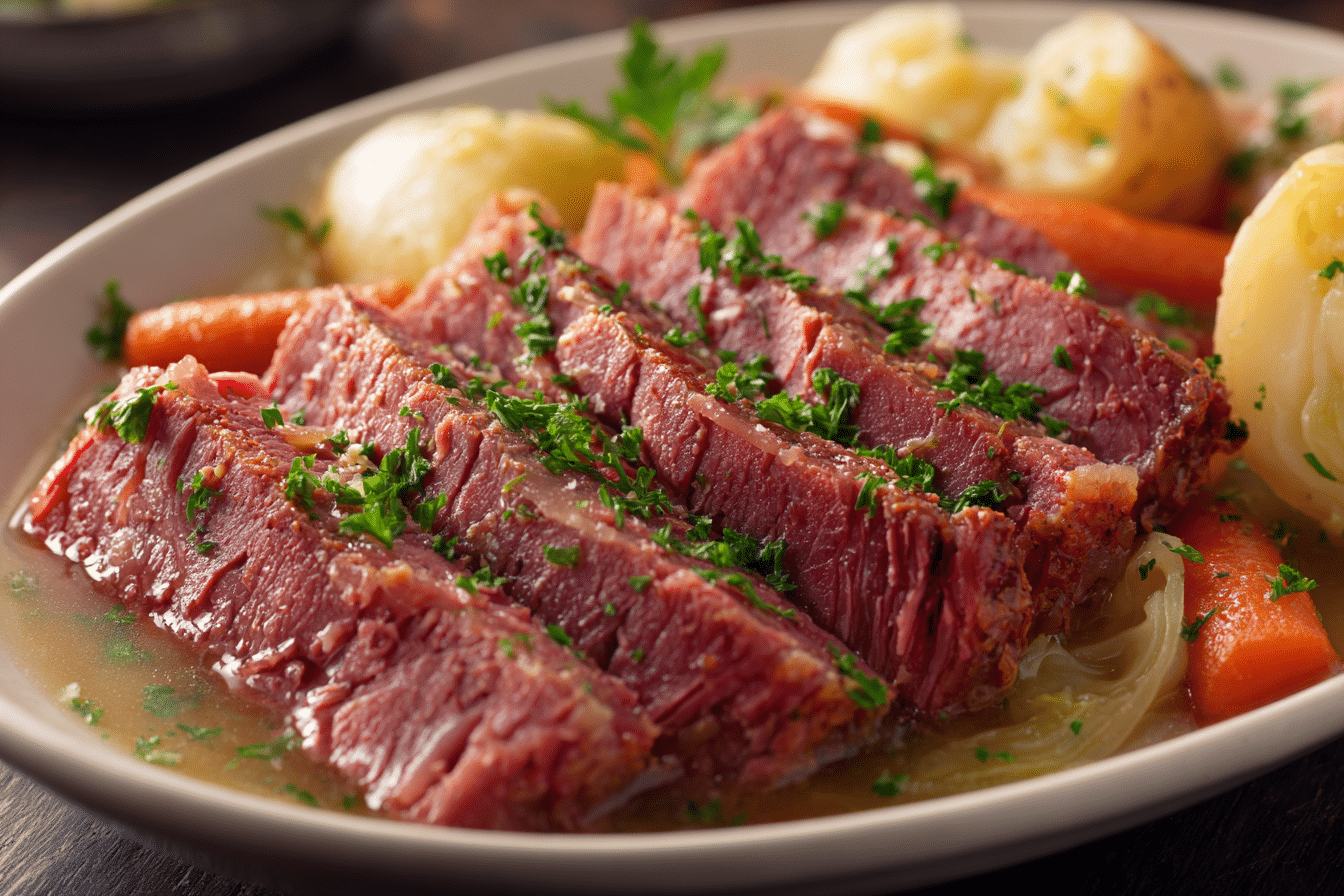
Traditional Irish corned beef is perfect for hearty meals that bring people together. Its rich flavor and warm, tender texture make it ideal for:
-
St. Patrick’s Day dinners
-
Sunday family gatherings
-
Comfort food in cold weather
-
Leftover-friendly meal prep
Serve it with:
-
Warm soda bread and butter
-
Whole grain mustard or horseradish cream
-
A cold Irish stout or amber ale
-
Leftovers in hash, sandwiches, or corned beef and cabbage soup
Its rustic charm and nostalgic aroma create an instant sense of comfort and celebration.
Nutritional & Health Notes
A typical serving (4 oz beef + vegetables) provides:
-
Calories: 300–350
-
Protein: 24–28g
-
Fat: 18g
-
Carbs: 15–20g (mostly from vegetables)
Corned beef is a protein-rich, iron-packed option, but it can be high in sodium due to curing. Rinsing and soaking help reduce salt content. Paired with fresh vegetables, it becomes a well-rounded meal full of fiber, vitamins, and slow-digesting carbs.
For lighter eating, portion with more cabbage and carrots and smaller slices of beef.
FAQs
Q1: Is corned beef actually Irish?
Corned beef as we know it is more Irish-American. In Ireland, pork (like bacon or ham) was more common. Irish immigrants in America began using affordable beef brisket, leading to the corned beef and cabbage tradition.
Q2: How long should I simmer corned beef?
Plan for 3 to 3.5 hours for a 4–5 lb brisket. The goal is fork-tender meat that still holds shape. Undercooking leaves it tough; overcooking can make it stringy.
Q3: Can I cook it in the oven instead?
Yes. Place brisket in a roasting pan, cover with liquid and foil, and bake at 300°F for 3.5 hours. Uncover and roast for the final 15–20 minutes for browning.
Q4: Do I need to use the spice packet?
It’s optional. Some prefer homemade blends for stronger spice notes. Classic additions include black pepper, mustard seed, coriander, cloves, and bay leaf.
Q5: Why is my corned beef too salty?
Some pre-packaged briskets are heavily brined. Rinse well and soak overnight to mellow the salt content. Avoid adding salt during cooking.
Q6: What’s the best way to reheat leftovers?
Steam slices or simmer in broth for best results. Microwaving can dry out the meat. Store in an airtight container for up to 4 days.
Q7: What cut is best — flat or point?
Flat cuts are leaner and slice neatly, great for presentation. Point cuts are more marbled and flavorful but can be harder to slice. Both are delicious when cooked low and slow.
Traditional Irish Corned Beef – A Hearty Classic with Deep Roots
Traditional Irish corned beef is a slow-simmered brisket, infused with pickling spices and served with tender cabbage, carrots, and potatoes — a comforting classic perfect for family gatherings.
- Prep Time: 15 minutes
- Cook Time: 3.5 hours
- Total Time: 3 hours 45 minutes
- Yield: 8–10 servings 1x
Ingredients
-
1 (4–5 lb) corned beef brisket (flat or point)
-
1 spice packet or 2 tbsp pickling spices
-
1 medium onion, quartered
-
3 garlic cloves, smashed
-
6 carrots, peeled and halved
-
1½ lbs baby potatoes, halved
-
½ head green cabbage, cut into wedges
-
Water or beef broth to cover
Instructions
-
Rinse corned beef under cold water and place in a large pot.
-
Add onion, garlic, spices, and enough water/broth to cover.
-
Bring to boil, then reduce to a low simmer. Cover and cook for 2.5–3.5 hours.
-
Add carrots, potatoes, and cabbage during the last 45 minutes of cooking.
-
Remove brisket and let rest for 10–15 minutes. Slice against the grain.
-
Serve with vegetables and a spoonful of broth.
Notes
-
Rinse and soak meat to reduce saltiness.
-
Use beer for extra depth in the broth.
-
Leftovers make excellent hash or sandwiches.