
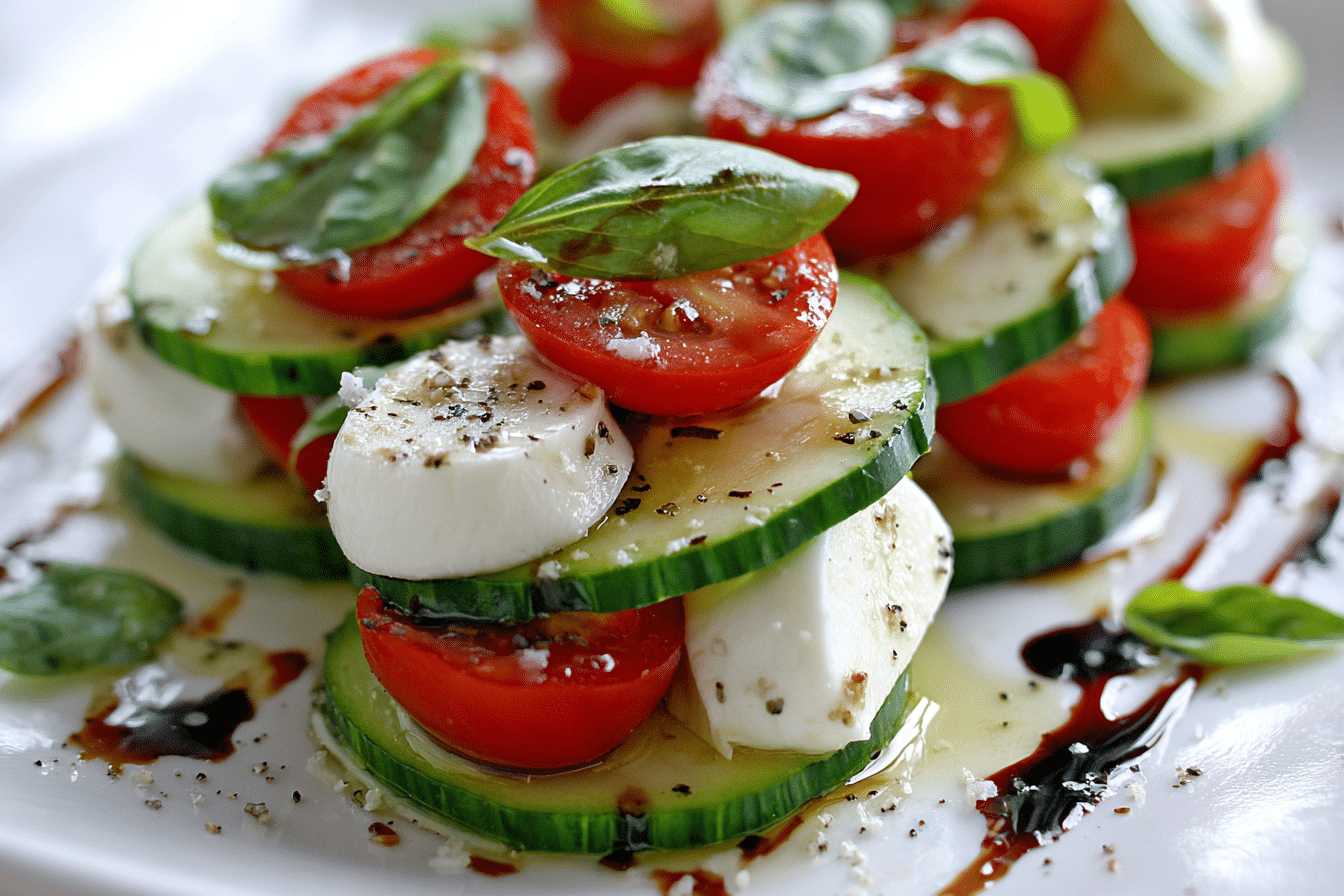
Easy Cucumber Caprese Salad brings together crisp cucumber, creamy mozzarella, ripe tomatoes, and fragrant basil in a bowl that feels light yet satisfying. Inspired by the classic Italian Caprese, this version adds cool cucumber for extra crunch and a refreshing finish.
Each bite delivers contrast. Juicy tomatoes release their sweetness, mozzarella offers soft richness, and cucumber keeps the texture lively. A drizzle of olive oil and a splash of balsamic vinegar tie everything together without overpowering the produce.
This salad suits warm afternoons, relaxed dinners, or casual gatherings. It requires minimal cooking and relies on quality ingredients to shine. Easy Cucumber Caprese Salad proves that a handful of thoughtfully combined components can create a dish that feels abundant and balanced.
Ingredients Overview
Cucumbers form the crisp foundation of Easy Cucumber Caprese Salad. English cucumbers work particularly well because their thin skin and low seed content provide steady crunch without bitterness. Persian cucumbers are another excellent option due to their compact size and delicate texture. If using standard garden cucumbers, peeling and removing large seeds improves texture.
Tomatoes bring juiciness and natural sweetness. Cherry or grape tomatoes hold their shape and add bright color, while vine-ripened varieties offer deeper flavor. Heirloom tomatoes contribute striking color variation and a tender interior, though they should be handled gently to avoid excess moisture in the bowl.
Fresh mozzarella delivers creamy contrast. Small mozzarella balls, often labeled ciliegine or bocconcini, blend evenly throughout the salad. A larger ball of mozzarella, cut into bite-sized cubes, works just as well. Burrata can substitute for an extra creamy finish, though it will create a softer texture.
Fresh basil adds aroma and subtle peppery notes. Whole leaves can be torn by hand to prevent bruising. Avoid chopping too finely, as basil darkens quickly once cut.
Extra-virgin olive oil coats the ingredients with richness and enhances flavor. Choose a fruity, balanced oil rather than an overly bitter variety. Balsamic vinegar provides gentle acidity. For a slightly sweeter profile, balsamic glaze may replace traditional vinegar in a smaller quantity.
Sea salt and freshly ground black pepper round out the flavors. Flaky salt sprinkled just before serving adds pleasant texture.
Step-by-Step Instructions
Begin by washing and drying all produce thoroughly. Moisture on the surface of cucumbers or tomatoes can dilute the dressing and create excess liquid at the bottom of the serving dish.
Slice the cucumbers into rounds about 1/4 inch thick. If using larger cucumbers, cut them lengthwise and then into half-moons for manageable pieces. Aim for uniform slices so every forkful contains balanced texture.
Next, prepare the tomatoes. Cherry or grape tomatoes should be halved. Larger tomatoes can be cut into bite-sized wedges. Remove any tough cores, but keep the seeds and juices, as they contribute flavor to the salad.
Drain the mozzarella and pat it gently with a paper towel. If using small balls, leave them whole or halve them for easier distribution. If using a larger piece, cut it into cubes roughly the same size as the cucumber slices.
Place cucumbers, tomatoes, and mozzarella into a large mixing bowl. Add torn basil leaves, scattering them evenly across the mixture.
In a small bowl, whisk together olive oil, balsamic vinegar, a pinch of sea salt, and black pepper. Whisk until slightly emulsified, creating a light dressing that clings to the ingredients.
Pour the dressing over the salad. Toss gently with a large spoon or clean hands, lifting from the bottom rather than stirring aggressively. Overmixing can bruise the tomatoes and cause mozzarella to break apart.
Allow the salad to rest for about 10 to 15 minutes at room temperature before serving. This brief resting period allows flavors to mingle without causing the vegetables to soften excessively.
Taste and adjust seasoning if necessary. Add a final sprinkle of flaky salt and a few additional basil leaves just before serving for a vibrant finish.
Avoid preparing the salad too far in advance. Extended refrigeration draws moisture from cucumbers and tomatoes, resulting in a watery texture. If advance preparation is required, store chopped components separately and combine shortly before serving.
Tips, Variations & Substitutions
For added depth, incorporate thinly sliced red onion. Soak the slices in cold water for 10 minutes beforehand to reduce sharpness.
A sprinkle of toasted pine nuts introduces gentle nuttiness and subtle crunch. Sunflower seeds or chopped almonds also pair well without overpowering the core ingredients.
For a Mediterranean twist, include kalamata olives and a pinch of dried oregano. Replace balsamic vinegar with red wine vinegar for a brighter profile.
Those seeking a dairy-free option can substitute fresh mozzarella with a plant-based alternative crafted from nuts. Choose a mild variety that melts softly against the vegetables.
If serving as a heartier side, add cooked and cooled pasta such as rotini or orzo. Toss lightly with additional olive oil to prevent sticking.
During peak tomato season, select multicolored varieties for visual appeal. When tomatoes lack sweetness, a small drizzle of honey in the dressing can gently round out acidity without overpowering the dish.
Serving Ideas & Occasions
Easy Cucumber Caprese Salad pairs beautifully with grilled chicken, roasted salmon, or seared steak. The cool crunch contrasts well with warm proteins and smoky flavors.
It also complements crusty bread and a light soup, creating a relaxed lunch spread. Serve alongside focaccia and sparkling water infused with lemon slices for a bright table setting.
For outdoor gatherings, present the salad in a wide, shallow bowl to showcase its color. Keep it lightly chilled until just before serving, then allow it to stand briefly at room temperature so flavors remain expressive.
This salad fits casual family dinners, picnics, and festive celebrations alike. Its clean profile makes it adaptable across seasons, particularly spring and summer when produce shines.
Nutritional & Health Notes
Easy Cucumber Caprese Salad offers a balanced mix of vegetables, dairy, and heart-healthy fats. Cucumbers provide hydration and modest fiber. Tomatoes contribute vitamin C, potassium, and antioxidants such as lycopene.
Mozzarella supplies protein and calcium, supporting muscle and bone health. Choosing fresh mozzarella keeps the texture soft and the ingredient list straightforward.
Olive oil contains monounsaturated fats associated with cardiovascular wellness when consumed in moderation. Basil adds trace nutrients along with aromatic compounds.
This salad remains naturally gluten-free. Those monitoring sodium intake may reduce added salt or rely primarily on the natural salinity of mozzarella.
Portion size influences overall calorie intake. Pairing the salad with lean protein or whole grains creates a balanced plate that feels satisfying without heaviness.
FAQs
1. Can Easy Cucumber Caprese Salad be prepared in advance?
It can be partially prepared ahead. Chop cucumbers and tomatoes, and store them separately in airtight containers in the refrigerator. Keep mozzarella drained and basil uncut until shortly before serving. Combine everything and add dressing within 30 minutes of serving to maintain crisp texture and prevent excess liquid accumulation.
2. Which cucumbers work best for this salad?
English and Persian cucumbers are ideal due to their thin skin and minimal seeds. Their texture remains firm without bitterness. Standard cucumbers can also be used, though peeling and removing large seeds improves consistency.
3. How can excess moisture be reduced?
Salt tomatoes lightly and allow them to rest in a colander for several minutes before mixing. Pat cucumbers dry after slicing. Avoid overdressing the salad, and serve promptly after tossing to maintain structure.
4. Can protein be added to turn it into a main dish?
Yes. Grilled chicken, shrimp, or chickpeas blend well with the existing flavors. Keep seasoning balanced so the added protein complements rather than dominates the fresh ingredients.
5. Is balsamic glaze preferable to balsamic vinegar?
Balsamic glaze offers thicker texture and a slightly sweeter profile. Use it sparingly, as its concentrated nature can overshadow delicate flavors. Traditional balsamic vinegar provides sharper acidity and a lighter finish.
6. How should leftovers be stored?
Store leftovers in an airtight container in the refrigerator for up to a day. Drain excess liquid before serving again. Texture may soften slightly, though flavor remains pleasant.
7. Can different herbs replace basil?
Fresh parsley or mint can substitute for basil, creating a different aromatic character. Use herbs sparingly to maintain balance. Combining small amounts of basil and parsley also creates subtle complexity without overwhelming the core profile.