
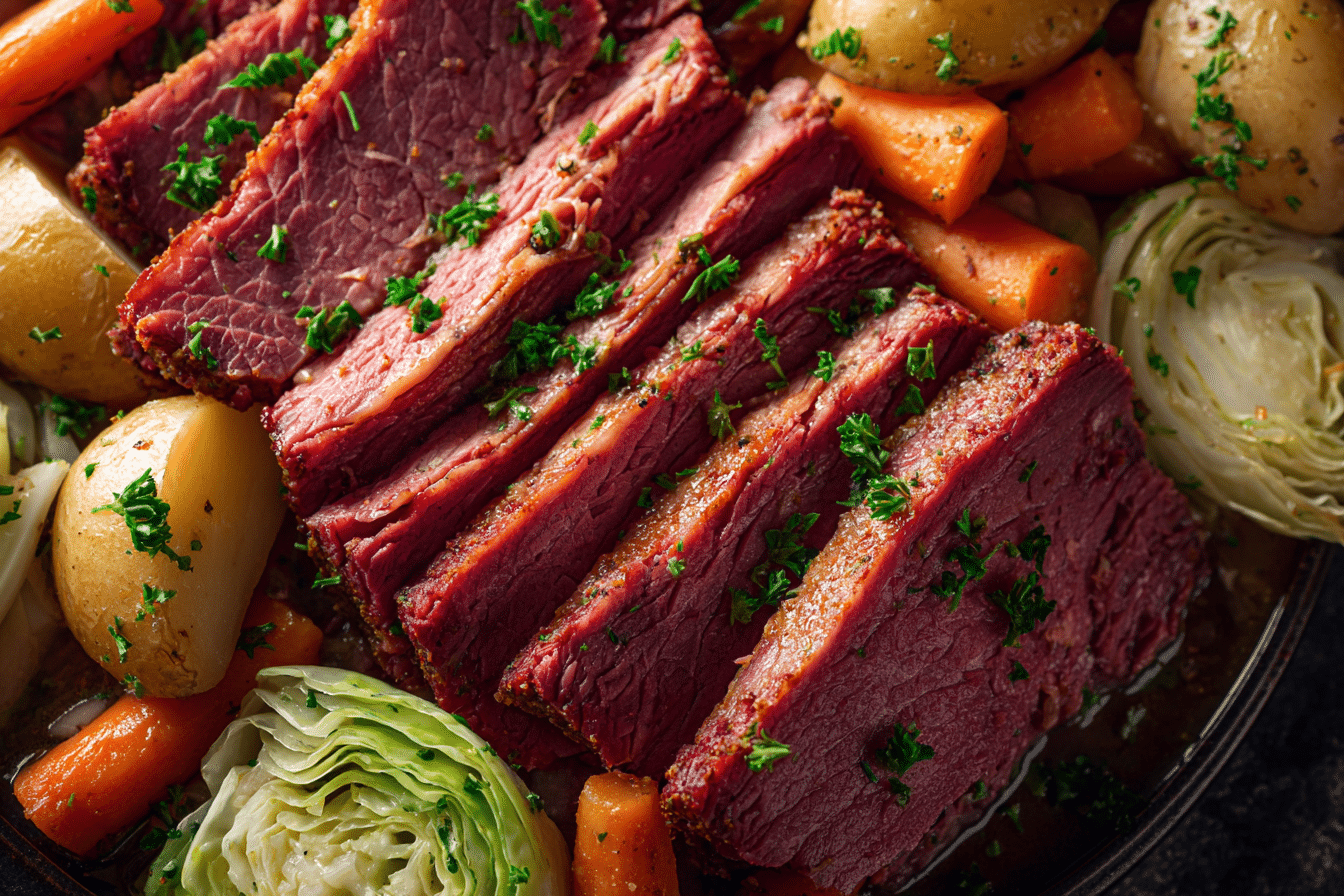
Corned beef is a timeless comfort food with deep roots in Irish, British, and Jewish culinary traditions. Whether you’re enjoying it on St. Patrick’s Day with cabbage or sliced thin for deli-style sandwiches, corned beef offers a deeply savory, tender, and uniquely spiced experience.
Despite its name, corned beef doesn’t involve corn at all. The term “corned” refers to the large “corns” or grains of rock salt traditionally used in the curing process. The meat is typically brisket — a tough but flavorful cut — that becomes fork-tender after long, slow cooking. Infused with pickling spices like mustard seed, coriander, peppercorns, and cloves, it delivers a rich, hearty flavor unlike any other.
Making corned beef at home allows for perfect tenderness, custom seasoning, and leftovers that turn into everything from hash to sandwiches. Whether braised on the stovetop, cooked in the oven, or simmered in a slow cooker, this dish is a true classic.
Ingredients Overview
Understanding your ingredients is the first step to making tender, flavorful corned beef. Here’s a breakdown of the essential components:
-
Corned Beef Brisket (with spice packet): Most grocery stores sell pre-brined brisket, typically 3–4 pounds, sealed in a bag with a spice packet. This cut has enough fat and connective tissue to stay juicy after hours of cooking.
-
Pickling Spices (if not included): Usually a blend of mustard seed, coriander, peppercorns, bay leaf, cloves, and sometimes allspice or cinnamon. These spices infuse the meat as it simmers.
-
Water or Beef Broth: Used to gently simmer the meat. Broth adds extra richness but water works perfectly fine, especially if your corned beef is already seasoned.
-
Garlic and Onion: Aromatics that deepen the broth flavor as the beef cooks.
-
Carrots, Potatoes, and Cabbage (optional): Traditional additions that cook in the same pot as the beef, soaking up the seasoned broth.
-
Bay Leaves and Whole Peppercorns: Help flavor the broth further and pair well with the brine.
Optional Additions
-
Beer: A bottle of dark stout (like Guinness) adds deep, malty notes and softens the saltiness.
-
Apple Cider or Apple Juice: For a subtle sweet contrast to the salty meat.
-
Brown Sugar or Maple Syrup: Some cooks add a small amount to balance the brine.
Step-by-Step Instructions
There are several ways to cook corned beef, but slow simmering is the traditional and most reliable method for maximum tenderness.
1. Rinse the Brisket
Take the corned beef out of its packaging and rinse it under cold water to remove excess surface brine and prevent the final dish from being overly salty. Do not skip this step.
Place the rinsed brisket in a large Dutch oven, pot, or slow cooker, fat side up.
2. Add Seasonings and Liquid
If your brisket came with a spice packet, sprinkle it over the top. If not, add 1–2 tablespoons of homemade pickling spice. Add sliced onions, garlic cloves, bay leaves, and whole peppercorns.
Pour in enough water or broth to cover the meat by about 1 inch.
3. Simmer Low and Slow
Stovetop Method:
Bring to a boil, then reduce to a very gentle simmer. Cover and simmer for 2.5 to 3.5 hours, depending on the size of your brisket.
Slow Cooker Method:
Cook on LOW for 8–10 hours or HIGH for 5–6 hours until the meat is fork-tender.
Oven Method:
Place everything in a roasting pan covered tightly with foil or a lid. Cook at 300°F for 3–4 hours.
4. Add Vegetables (Optional)
About 1 hour before the corned beef is done, add potatoes and carrots to the pot. With 30 minutes left, add cabbage wedges. This allows the veggies to cook through without becoming too soft.
Tip: You can also cook the vegetables separately in some of the cooking liquid if you prefer more texture.
5. Rest and Slice
Remove the brisket from the liquid and let it rest for 10–15 minutes before slicing. Always slice against the grain for the most tender bite.
Serve warm with the cooked vegetables, a ladle of broth, and a dab of mustard or horseradish.
Tips, Variations & Substitutions
Cooking Tips
-
Low and slow wins. Rushing corned beef results in a tough texture.
-
Trim fat after cooking. Leave the fat cap on during cooking for moisture, but trim before slicing if desired.
-
Taste before adding salt. The brine is already salty, so add minimal extra salt to vegetables or broth.
Variations
-
Sweet-Glazed Corned Beef: After simmering, brush the top with a mixture of mustard and brown sugar and broil for 3–5 minutes.
-
Roasted Finish: Remove the brisket after simmering and roast uncovered at 400°F for 15 minutes to caramelize the top.
-
Corned Beef and Cabbage Soup: Shred leftovers into broth with chopped vegetables for a cozy second-day meal.
Substitutions
-
Flat Cut vs. Point Cut Brisket: Flat cut is leaner and slices more evenly. Point cut is fattier and more flavorful — both work well.
-
Root Vegetables: Parsnips, turnips, or rutabaga can be added with potatoes and carrots.
 Serving Ideas & Occasions
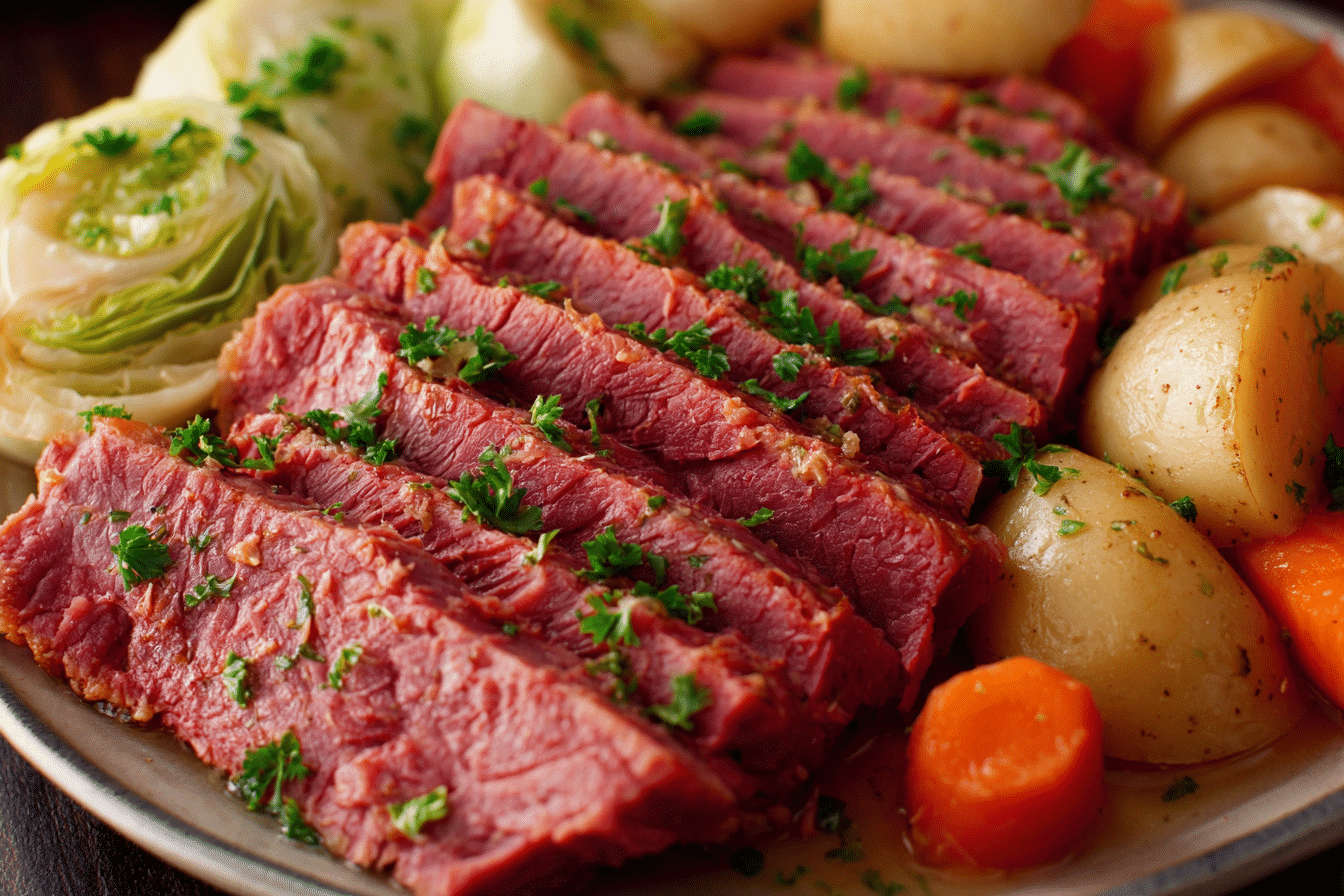
Corned beef is traditionally served with boiled cabbage, carrots, and potatoes, but its versatility makes it ideal for:
-
St. Patrick’s Day dinners
-
Weeknight slow cooker meals
-
Sunday comfort food spreads
-
Leftovers in Reuben sandwiches, hash, or wraps
For a complete meal:
-
Serve with mustard, horseradish sauce, or Guinness gravy
-
Pair with Irish soda bread or buttered rye
-
Enjoy with a pint of ale or stout for classic pub-style comfort
Its briny, bold flavor pairs especially well with simple, hearty sides and bitter greens like kale or cabbage.
Nutritional & Health Notes
Corned beef is high in protein and rich in iron, but also relatively high in sodium and saturated fat due to the curing process and brisket cut.
To lighten it:
-
Trim visible fat after cooking
-
Serve with extra vegetables to balance the salt and fat content
-
Choose leaner cuts or smaller portions for controlled calorie intake
One serving (around 3–4 oz cooked) typically contains:
-
~250–300 calories
-
~21–24g protein
-
~18g fat (with 6–7g saturated)
-
~900–1000mg sodium
Corned beef can be enjoyed occasionally as part of a balanced diet, especially when paired with fiber-rich vegetables and whole grains.
FAQs
Q1: Do I need to rinse corned beef before cooking?
A1: Yes. Rinsing removes excess surface salt and helps prevent the final dish from being overly salty. It won’t affect the meat’s flavor since it’s already deeply brined.
Q2: What’s the best way to cook corned beef for tenderness?
A2: Low and slow. Simmering on the stovetop or slow cooker for several hours breaks down tough fibers and yields tender meat.
Q3: Can I freeze cooked corned beef?
A3: Yes. Let it cool completely, then wrap tightly in foil or store in an airtight container. Freeze for up to 2 months. Thaw overnight in the fridge before reheating.
Q4: What’s the difference between point and flat cut brisket?
A4: The flat cut is leaner and better for slicing. The point cut has more marbling and flavor but can be more irregular in shape. Both are excellent for corned beef.
Q5: Why is my corned beef tough?
A5: It was likely undercooked or cooked at too high a temperature. Corned beef needs a long, slow simmer to become tender. Keep the heat gentle and be patient.
Q6: Can I cook it in an Instant Pot?
A6: Yes. Pressure cook on HIGH for 90 minutes, then let it naturally release for 10 minutes. Add vegetables and pressure cook for another 5 minutes if desired.
Q7: Can I make homemade corned beef from scratch?
A7: You can! It involves curing a beef brisket in a salt and spice brine for 5–7 days in the fridge. It’s simple but requires patience and proper food safety practices.
PrintCorned Beef – Tender, Savory, and Perfectly Seasoned
Classic corned beef simmered with spices until tender, served with cabbage, carrots, and potatoes — perfect for comforting meals and holiday traditions.
- Prep Time: 15 minutes
- Cook Time: 3 hours
- Total Time: 3 hours 15 minutes
- Yield: 6 servings 1x
Ingredients
-
3–4 lb corned beef brisket (with spice packet or homemade spices)
-
10 cups water or low-sodium beef broth
-
1 onion, quartered
-
4 cloves garlic, smashed
-
2 bay leaves
-
1 tbsp whole peppercorns
-
4 carrots, peeled and cut into chunks
-
4 potatoes, peeled and halved
-
1 small cabbage, cut into wedges
Instructions
-
Rinse corned beef and place in large pot or slow cooker.
-
Add onion, garlic, bay leaves, peppercorns, and spice packet (or 1–2 tbsp pickling spice).
-
Pour in water or broth to cover beef.
-
Simmer on stovetop 2.5–3.5 hours, or slow cook on LOW 8–10 hours.
-
Add carrots and potatoes 1 hour before beef is done. Add cabbage during last 30 minutes.
-
Remove beef and let rest 10–15 minutes before slicing against the grain.
-
Serve with vegetables and a spoonful of broth.
Notes
-
Add a bottle of stout for deeper flavor.
-
Leftovers make great sandwiches or hash.
-
Store in fridge for up to 4 days or freeze for 2 months.