

Corned beef is a flavorful, salt-cured beef brisket known for its signature pink color, tender texture, and robust taste. Whether you’re preparing it for St. Patrick’s Day, a hearty winter meal, or your favorite sandwich, corned beef can be cooked in multiple ways—boiled, baked, or slow-cooked—each bringing out its unique qualities. This guide will walk you through everything you need to know to master the art of making corned beef at home.
What Is Corned Beef?
Corned beef is made from beef brisket that has been cured in a seasoned brine. The “corned” in the name comes from the large grains or “corns” of salt used in the curing process. While it’s most associated with Irish-American cuisine, particularly the St. Patrick’s Day tradition of corned beef and cabbage, its roots lie in British and Jewish culinary history as well.
The brisket cut comes from the lower chest of the cow, which contains a lot of connective tissue and fat. This makes it ideal for slow, moist cooking methods that break down those tough fibers into tender, flavorful bites.
Corned Beef Cuts: Flat Cut vs. Point Cut
Before cooking, it’s important to understand the two types of brisket cuts used for corned beef:
-
Flat Cut: Uniform in shape, leaner, and easier to slice. Most commonly found in stores and ideal for presentation.
-
Point Cut: Thicker and fattier with more marbling, which results in slightly more flavor. Best if you’re shredding the meat.
Choose the cut based on your needs—flat for neat slices, point for rich, juicy pulled corned beef.
Ingredient Overview
Corned Beef Brisket (3–4 lb)
Sold either raw and pre-brined (often vacuum-sealed with a spice packet) or cooked and sliced at the deli. Go for raw, brined brisket for home-cooking.
Spice Packet
Usually included in pre-packaged corned beef. Contains spices like mustard seed, coriander, black peppercorn, cloves, and bay leaves. If missing, you can easily replicate it.
Aromatics (optional but recommended)
-
1 onion, quartered
-
3 garlic cloves, smashed
-
2 bay leaves
-
1 tsp whole black peppercorns
Cooking Liquid
-
Water is traditional, but beef broth or a mix of water and beer (like stout or lager) adds depth.
Vegetables (for corned beef and cabbage)
-
4 carrots, cut into chunks
-
3 celery stalks
-
1½ pounds baby potatoes
-
½ head green cabbage, cut into wedges
Cooking Methods: Choose Your Style
Method 1: Boiled Corned Beef (Traditional)
The most classic and widely used technique.
Instructions:
-
Rinse the brisket under cold water to remove excess brine.
-
Place in a large pot and cover with cold water (or half water, half beef broth or beer).
-
Add spice packet and aromatics.
-
Bring to a boil, then reduce heat and simmer gently for 2½–3 hours (or about 45–60 minutes per pound).
-
In the final 30–40 minutes, add carrots, potatoes, and celery.
-
Add cabbage wedges for the final 15 minutes.
-
Rest meat 10–15 minutes before slicing against the grain.
Method 2: Baked Corned Beef (With a Glaze)
Perfect for crisping up the exterior and enhancing flavor.
Instructions:
-
Preheat oven to 300°F.
-
Rinse brisket and place in a baking dish with a small amount of water or broth.
-
Cover tightly with foil and bake for 2½–3 hours.
-
Optional: In the last 30 minutes, brush with a glaze (brown sugar, mustard, vinegar) and broil until caramelized.
Method 3: Slow Cooker Corned Beef
Hands-off and ultra-tender.
Instructions:
-
Place brisket in slow cooker, sprinkle with spice packet.
-
Add onions, garlic, and enough water or broth to cover the meat.
-
Cook on LOW for 8–10 hours or HIGH for 4–5 hours.
-
Add cabbage and vegetables during the final 1–2 hours.
Tips, Variations & Substitutions
Tips for Success
-
Always slice against the grain. This shortens muscle fibers, making each bite tender.
-
Don’t overcook. Simmering too vigorously can cause the meat to toughen.
-
Let it rest. A 10–15 minute rest before slicing keeps juices in the meat.
Flavor Variations
-
Guinness Corned Beef: Swap some water with stout for richness.
-
Sweet Glaze Finish: Combine Dijon mustard, brown sugar, and a splash of apple cider vinegar. Brush on and broil for a crisp crust.
-
Spicy Kick: Add chili flakes or peppercorns to the spice mix.
Substitutions
-
No spice packet? Combine:
-
1 tsp mustard seeds
-
1 tsp coriander seeds
-
1 tsp black peppercorns
-
2 bay leaves
-
3 whole cloves
-
-
Low-sodium version: Rinse brisket thoroughly and use low-sodium broth.
 Serving Ideas & Occasions
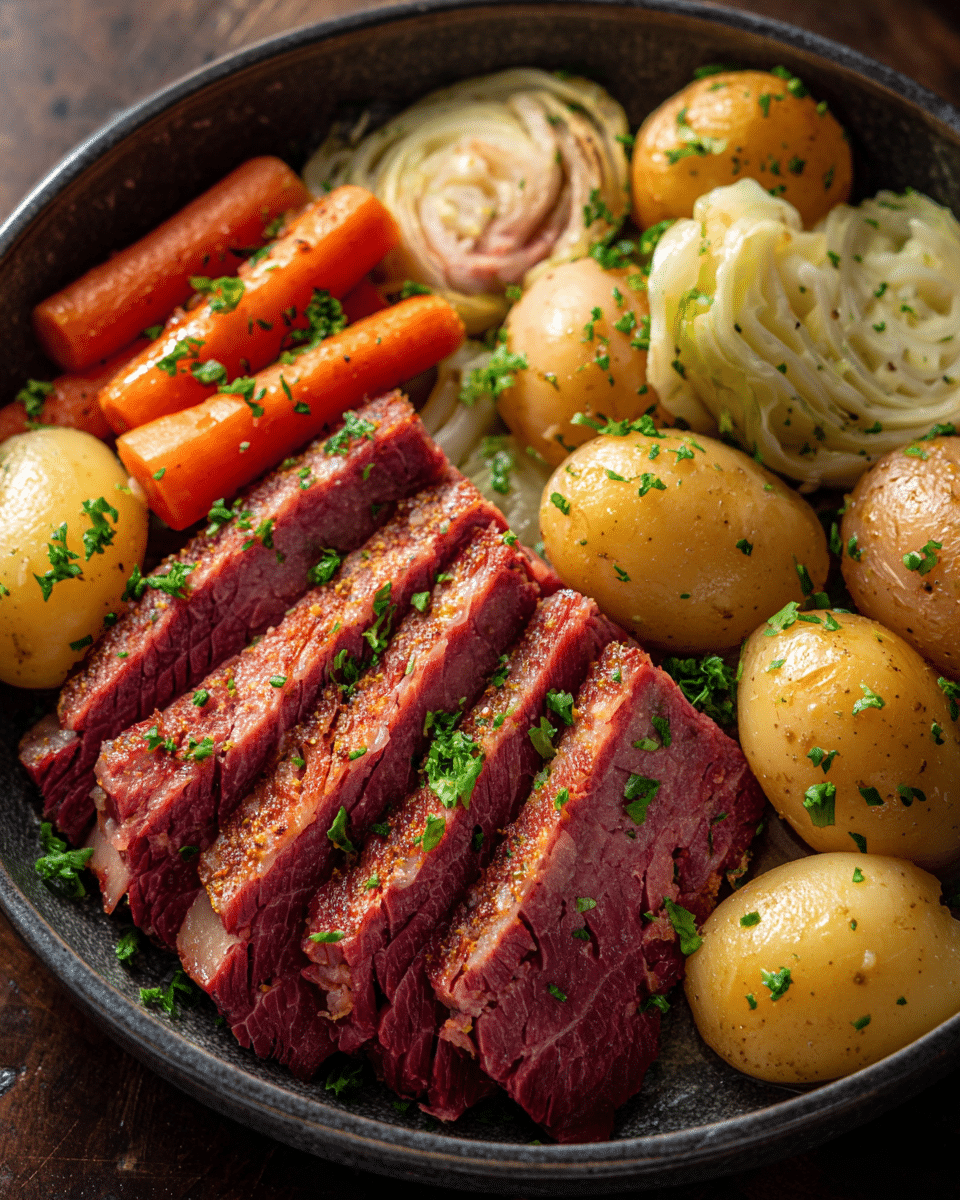
Corned beef is best served sliced or shredded alongside vegetables or tucked into sandwiches. Here are popular serving options:
-
Corned Beef and Cabbage: A classic one-pot meal.
-
Reuben Sandwiches: Sliced corned beef, Swiss cheese, sauerkraut, and Russian dressing on grilled rye.
-
Corned Beef Hash: Crisped up with potatoes and onions, topped with fried eggs.
-
Holiday Meal: Centerpiece for St. Patrick’s Day or Passover meals (in some Jewish traditions).
Condiments to Serve With:
-
Grainy mustard
-
Horseradish sauce
-
Pickles or sauerkraut
-
Rye or soda bread
Nutritional & Health Notes
Corned beef is flavorful and protein-rich, but it comes with a few nutritional considerations:
Per 6 oz cooked serving (approximate):
-
Calories: 300–350
-
Protein: 30g
-
Fat: 20g
-
Sodium: High (900–1,200mg depending on preparation)
-
Iron: 15–20% of daily value
Health Tips:
-
Use low-sodium broth and rinse brisket well before cooking.
-
Trim excess fat before or after cooking.
-
Pair with fiber-rich vegetables or whole grains to balance the meal.
-
Freeze leftovers for portion control and easy reheating.
FAQ
1. Should I rinse corned beef before cooking?
Yes, especially if it was brined in a salty solution. Rinsing removes surface salt and helps control overall saltiness in the finished dish.
2. How do I know when corned beef is done?
It should be fork-tender, not falling apart. Internal temperature should reach 195°F–205°F. The higher end gives a more shreddable texture.
3. Why is my corned beef tough?
It was likely undercooked or cooked at too high a temperature. Brisket needs slow, gentle heat to break down connective tissue.
4. Can I make corned beef ahead of time?
Yes. Cook, cool, and store in the fridge for up to 4 days. Reheat gently in broth or foil-wrapped in the oven at 325°F until warm.
5. Is corned beef healthy?
It’s high in protein and iron but also high in sodium and saturated fat. Enjoy in moderation and balance with fresh vegetables.
6. Can I freeze cooked corned beef?
Absolutely. Slice or shred, then freeze in airtight containers for up to 2 months. Thaw overnight and reheat in a skillet or oven.
7. What’s the pink color in corned beef?
That’s from sodium nitrite in the curing solution. It preserves the meat and gives it its iconic rosy hue—even after cooking.
PrintCorned Beef: How to Cook It Right (Boiled, Baked, or Slow Cooker)

Tender, flavorful corned beef cooked to perfection—boiled, baked, or slow-cooked. A classic dish for St. Patrick’s Day or any comfort meal.
- Prep Time: 10 minutes
- Cook Time: 3 hours
- Total Time: 3 hours 10 minutes
- Yield: Serves 6–8 1x
Ingredients
-
3–4 lb corned beef brisket with spice packet
-
1 onion, quartered
-
3 garlic cloves, smashed
-
2 bay leaves
-
1 tsp peppercorns
-
4 cups water or beef broth
-
4 carrots, chopped
-
3 celery stalks
-
1½ lb baby potatoes
-
½ head green cabbage, cut into wedges
Instructions
-
Rinse corned beef to remove excess brine.
-
Place in a pot, slow cooker, or baking dish. Add aromatics and cover with water or broth.
-
Cook using your preferred method:
-
Boil: Simmer 2½–3 hours.
-
Slow Cooker: LOW 8–10 hours.
-
Bake: 300°F, covered, for 2½–3 hours.
-
-
Add vegetables in the last 1–2 hours of cooking.
-
Rest meat for 10 minutes. Slice against the grain and serve.
Notes
-
Add 1 cup of beer for deeper flavor.
-
For glazed version, broil with brown sugar and mustard during the final 30 minutes.
-
Store leftovers in fridge (4 days) or freeze (2 months).